

Is It Safe to Get a Hair Transplant in Turkey? Here's What Vetting Looks Like
The Short Answer — Yes, at a Vetted Clinic
A hair transplant in Turkey is safe when performed at a vetted clinic: one where a qualified physician designs the procedure, certified specialists perform the extraction and placement, and the clinic holds Turkish Ministry of Health licensing under the Hair Transplant Units Regulation. The quality risk in the Turkish market is the gap between vetted and unvetted clinics — not the country, the technique, or the team-based model used by every reputable provider.
What makes Turkey different from the UK isn't quality. It's the spread of quality. Thousands of clinics operate there, from internationally accredited facilities with decades of clinical experience to unlicensed operators with no oversight. The question isn't whether Turkey is safe; the question is how you find a clinic that is.
That's what the rest of this guide covers. If you want to understand specifically what tends to fail at unvetted clinics, our article on hair transplants gone wrong covers those patterns in detail.
What Safety Looks Like at a Vetted Clinic
Every team member involved in a hair transplant procedure in Turkey must hold Ministry-registered certification under the Hair Transplant Units Regulation, in force since 2023 and most recently amended in September 2025. A qualified physician designs the hairline and the aesthetic plan; a team of certified hair transplant specialists then performs the extraction and placement that brings the design to life.
Three structural elements define a safe procedure: the clinical team, regulatory oversight, and the physical environment.
The Clinical Team — Who Performs Your Procedure
A qualified physician designs your hairline. They analyse your facial structure, hair type, and goals, then determine where each graft will be placed, at what angle, and at what density. This is the architectural blueprint for your result.
A team of certified hair transplant specialists then carries out the procedure — extracting each graft from the donor area and implanting it according to the design. Both roles are essential. The physician is the architect; the specialist team are the craftspeople. Both must hold Ministry-registered credentials.
Ministry of Health Licensing
Turkey's Hair Transplant Units Regulation defines who is permitted to perform each part of the procedure, what credentials are required for every team member, and what licensing the clinic itself must hold. A clinic that operates without Ministry licensing — or one that uses uncertified personnel — is operating outside the law, regardless of how polished its marketing looks.
Facility and Hygiene Standards
A licensed clinic operates a sterile procedure room held to the same standards as outpatient surgical facilities. Single-use instruments, autoclave sterilisation between procedures, sealed donor and recipient zones, and proper biohazard handling are baseline requirements. The gap between "we comply with these standards" and "we operate without them" is the gap between a vetted and an unvetted clinic.
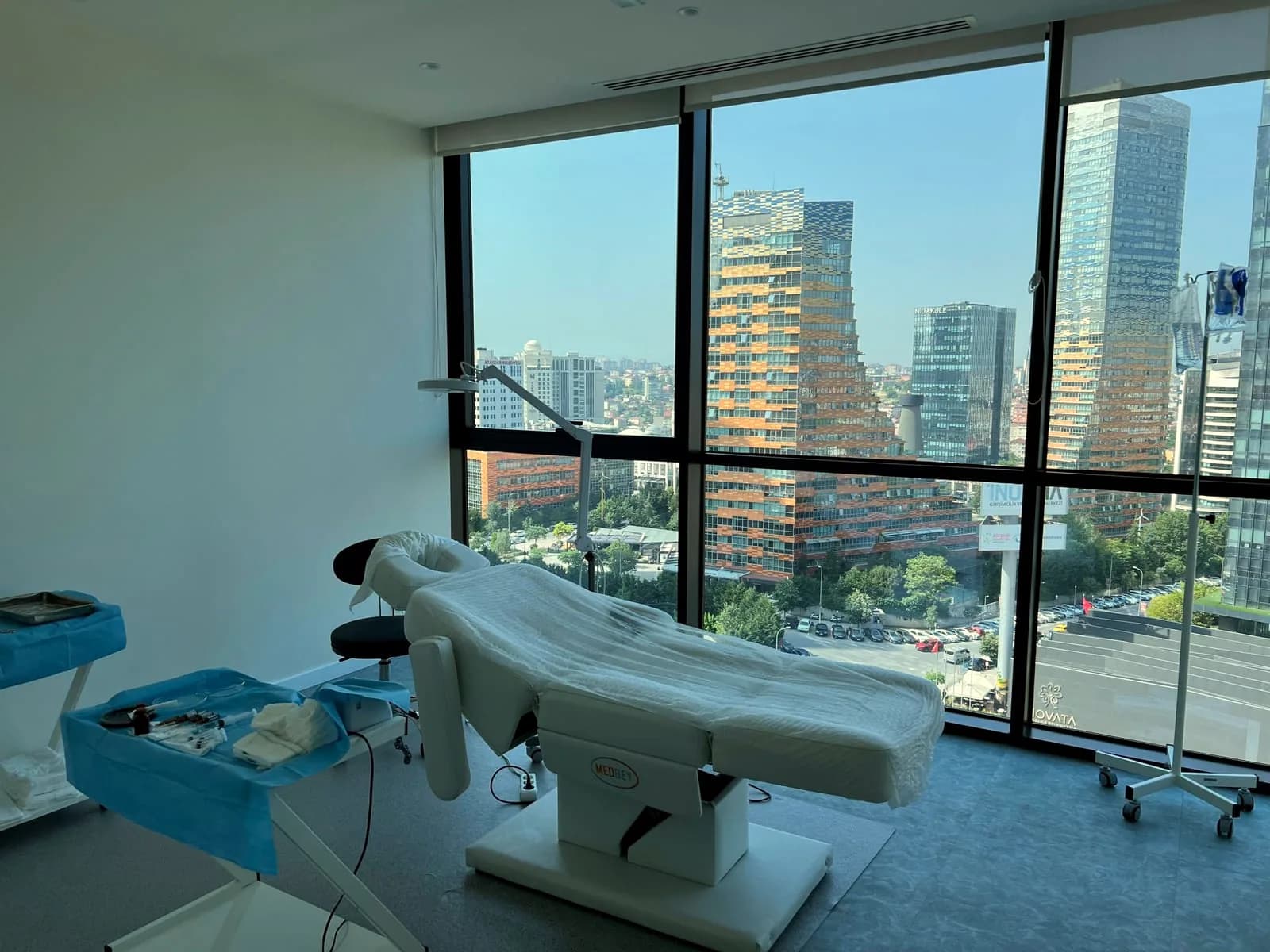
I didn't know what to expect, but they were professional — kind of explaining what they were doing, why they were doing it. They know where your hairline should be for your age. What you don't want is a 19-year-old hairline when you're in your 50s. That kind of gave me confidence without even asking. It's just the professionalism.
How Electivio Vets Clinics — Before You Ever Book
Electivio works with three clinics out of the thousands operating in the Turkish market. Every partner clinic undergoes an in-person inspection covering facility standards, hygiene protocols, team credentials, and verifiable patient outcomes — with criteria shaped by Medical Director Dr. Ulaş Güvenç, a board-certified dermatologist with 12 years of clinical experience and membership of the European Academy of Dermatology and Venereology.
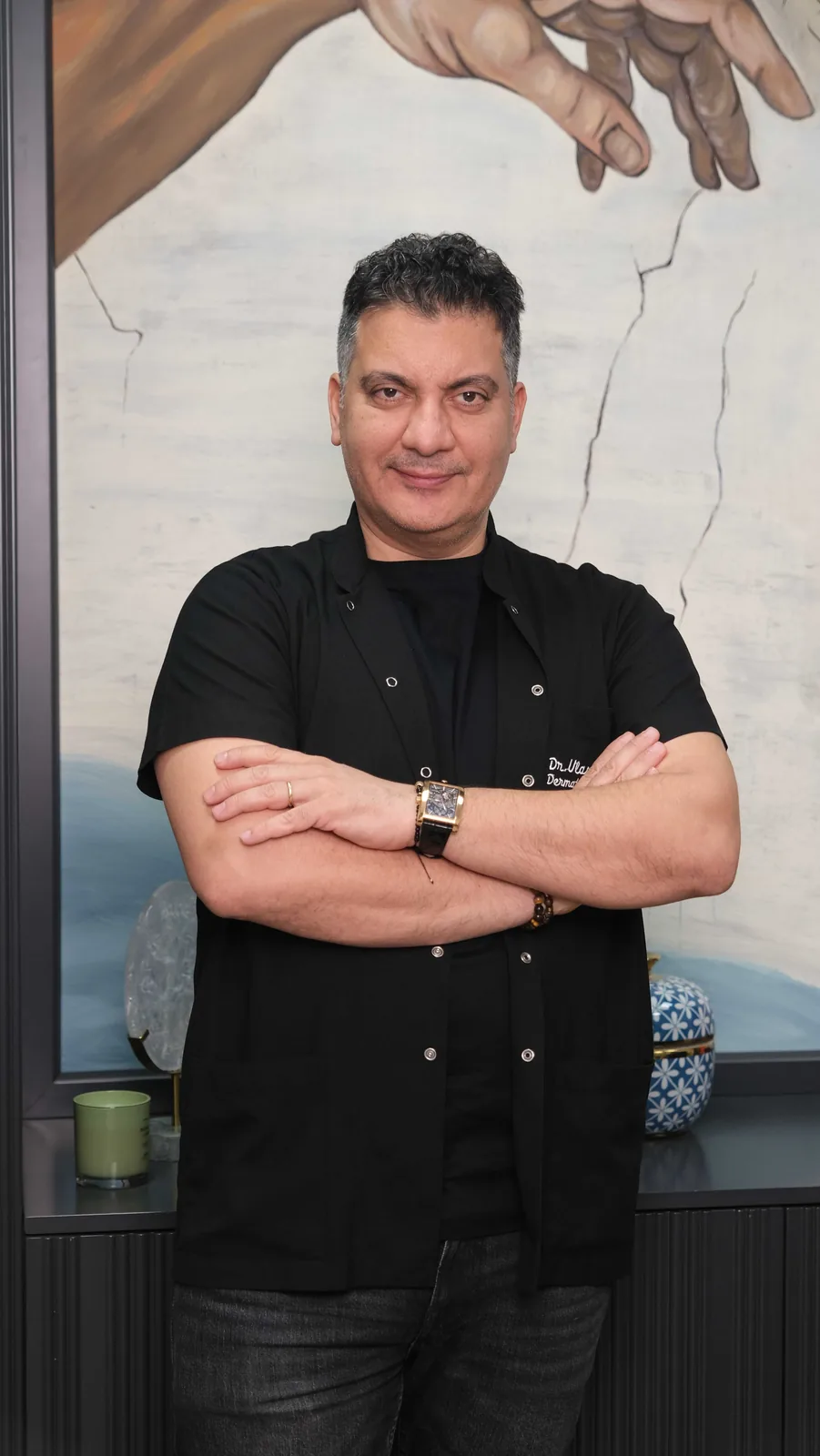
The inspection is the work most patients can't do themselves. Visiting clinics in person, checking that the doctor named on the website is genuinely the one designing and overseeing your procedure, reviewing real patient files rather than curated marketing photos, confirming Ministry licensing is current — none of this is impossible for an individual, but it requires being in Turkey, speaking Turkish, and knowing what to look for. Dr. Güvenç does it because that's his role within the Turkish hair restoration market. He shaped the criteria, and he keeps shaping them as the market evolves.
Three clinics. Out of thousands. That ratio is the entire point of Electivio: the vetting is the work, and it's already done before you book.
What's in this video
How the family member who planned the trip researched and arranged it, and why she trusted Electivio.
- She came in wary, and what reassured her first was the Swiss brand behind Electivio. In her words, "firstly it was the Swiss brand behind it… they're always high standards."
- She valued having someone who had already vetted the clinic before her family travelled, so she wasn't judging a clinic abroad on her own.
- She found the coordinators knowledgeable and easy to reach, and the clinic clean and welcoming, ending on a clear recommendation.
I think firstly it was the Swiss brand behind it — they're always high standards. If I was just contacting anybody in Turkey, I wouldn't know what they're like until I got here. So it was really good to have that middle person in place who's already checked everything out.
Clinics don't stay in the network automatically. Patient feedback, follow-up outcomes, and periodic reassessment are tracked. A clinic that slips below standard is removed.
What Happens on the Day — Inside a Vetted Procedure
A hair transplant is performed under local anaesthetic, and you remain fully conscious throughout. A typical procedure lasts 6 to 8 hours with scheduled breaks, and is carried out in a procedure room held to sterile clinical standards equivalent to those required for outpatient surgical procedures in Turkey.
The day starts with a final consultation: the surgeon reviews your design, confirms the graft count from your Treatment Plan, and answers any last questions. Blood work and consent paperwork follow. Then the procedure itself — extraction first, then placement — with breaks for food, water, and rest.
You stay awake the whole time. You can talk to the team, ask questions, or just listen to music. Most clinics allow a companion in the room if you'd find that helpful — worth asking about before you travel, because it isn't a given everywhere.
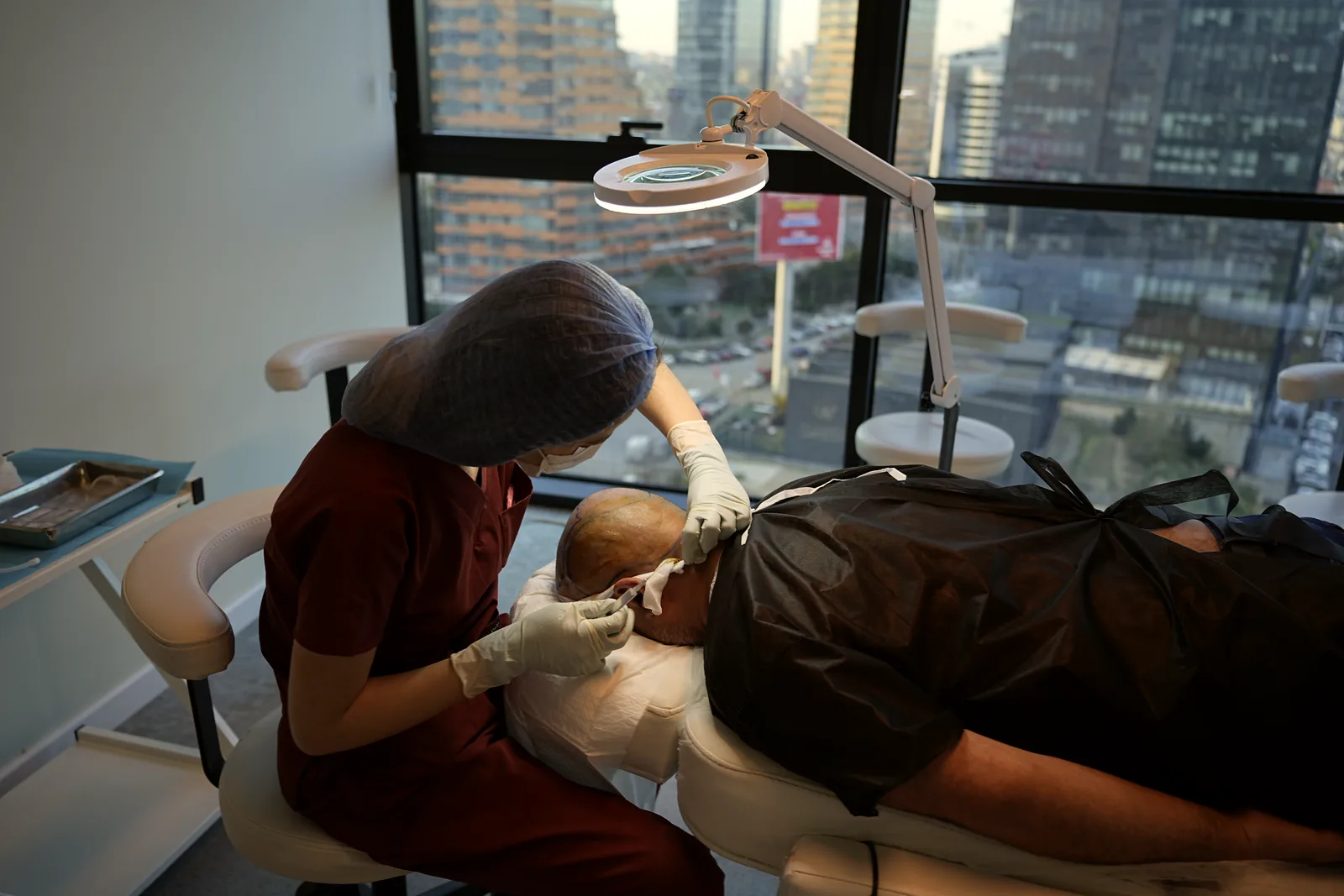
They ask you the whole time, 'How's the pain? Is it bearable?' And the minute you say stop, they stop. They rub the area, give you time to recover, and go again. They don't just carry on when you're in pain.
After the procedure, the surgeon checks the result, the team applies post-op dressings, and you head back to the hotel with a written aftercare schedule.
The 12-Month Safety Net — After You're Home
Every Electivio procedure includes a structured 12-month follow-up programme with scheduled check-ins. If a complication arises after you return home, an independent dermatologist assessment is covered up to €300. If the 12-month result falls below the target graft count specified in your Treatment Plan, the Electivio Satisfaction Promise covers a corrective procedure — surgeon, hospital, and transfers included.
The Promise is a contract, not a marketing line. Your Treatment Plan sets a specific target graft count before you fly. At 12 months, the result is measured against that target. If it falls short and you've followed the aftercare protocol, the corrective procedure is covered.
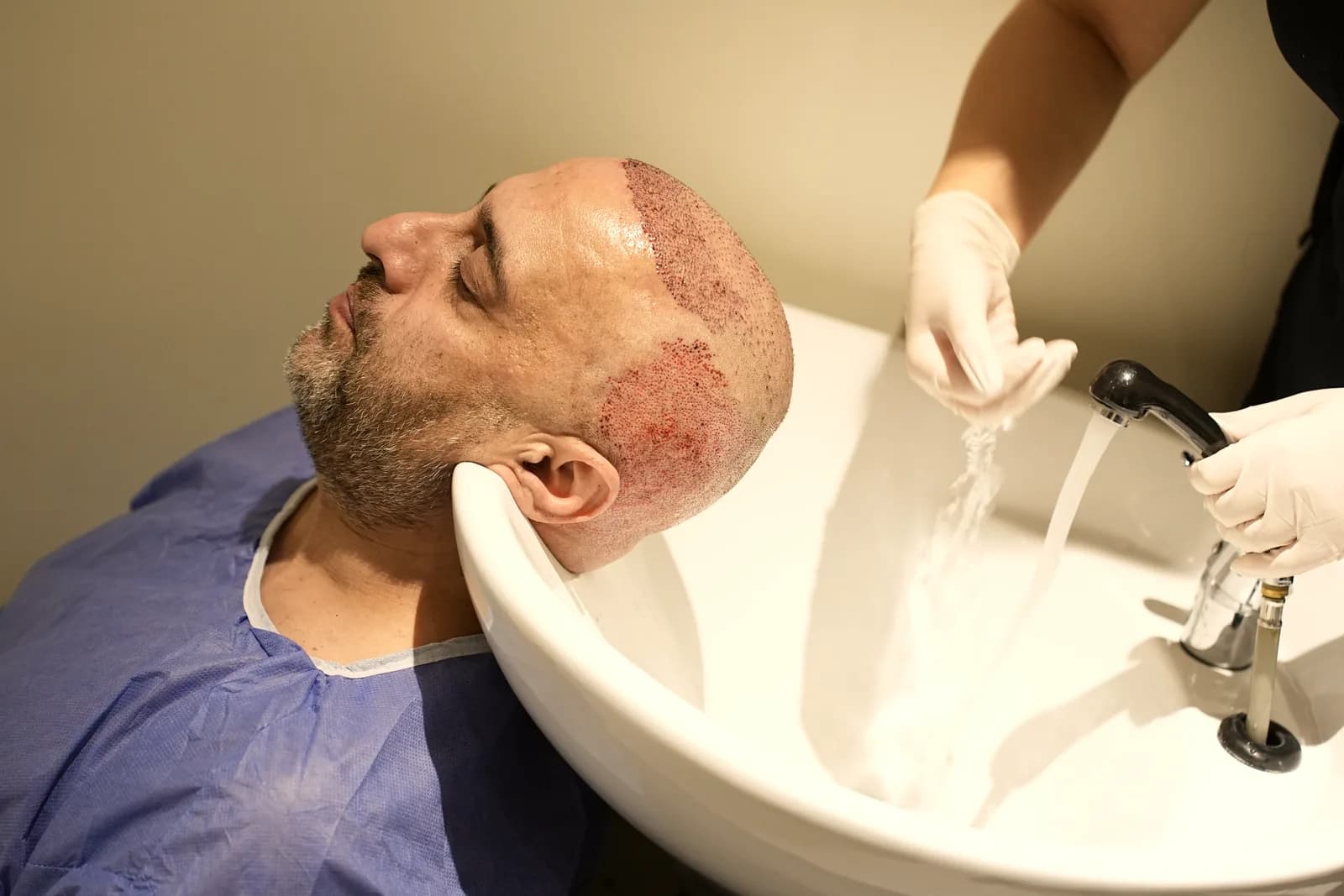
The €300 dermatologist cover exists because complications, when they happen, usually happen back home — not in Turkey. Having someone qualified to look at them, paid for in advance, is the difference between a stressful unknown and a manageable next step.
How to Identify a Vetted Clinic
A vetted hair transplant clinic in Turkey holds Ministry of Health licensing, employs a qualified physician supported by a certified specialist team, provides fixed pricing in writing before travel, shares verifiable patient outcomes rather than curated marketing photos, and offers a structured aftercare protocol with named accountability for the 12 months following the procedure.
You can check these signals yourself — request the clinic's licensing documentation, ask for the physician's credentials in writing, look for real patient experiences rather than curated marketing, and never accept a price quote that isn't fixed in advance. Or you can use a facilitator that has already done it. The price difference between UK and Turkish clinics is structural, not a safety compromise. Either way, the work has to happen before you book.